
 Proudly Manufactured in the USA
Benefits of Steam Cleaning in Food Processing
All food production facilities must maintain stringent sanitation protocols, but dry food processing facilities face additional challenges. Because moisture would ruin a package of crackers, a bag of flour, or a powdered drink mix, traditional cleaning methods aren’t an option. Many companies resort to the slow, painstaking process of removing conveyor belts to wash them or performing a tedious process of scraping, wiping, and vacuuming.
Fortunately, there’s another way. Dry steam sanitation is faster, safer, environmentally friendly, and cost-effective. More and more facilities use it to meet sanitation requirements without putting their products at risk.
This process relies on high-temperature, low-moisture steam, which not only kills mold, bacteria, and other microorganisms, but also removes grease, dirt, and other grime. Because the dry steam evaporates quickly, floors, countertops, conveyor belts, and more are left clean, dry, and ready to use.
Main Advantages of Steam Cleaning in Food Processing Environments
 In food processing facilities, dry steam cleaning has several advantages over traditional wash-down or chemical cleaning:
Clean-In-Place (CIP) Technology
Instead of removing a conveyor belt to wash it down and let it dry outside the production room, commercial steam sanitation systems allow you to safely clean it in place. This saves time and labor, and it provides a more thorough cleaning since the hot steam can get into all the cracks and crevices in the equipment that may be hard to reach manually. The steam dries quickly, so you don’t run the risk of contaminating your food products with moisture.
Chemical-Free Cleaning
Traditional harsh chemical cleaners are a common choice for sanitizing food and beverage processing equipment, but they pose a number of risks, including:
- Toxic Ingredients: The concentrated chemical cleaners used in food processing environments can potentially harm facility sanitation workers. Using these cleaners typically requires special protective gear, including protective clothing, eye protection, and even respirators.
- Contamination: Residue from these harsh chemical cleaning agents can remain on conveyors and other equipment, contaminating food and packaging when processing resumes after cleaning. This can potentially impact product quality and consumer health and safety.
- Improper Use: Chemical cleaners typically require users to follow a detailed set of instructions for proper use. Sanitation workers in food and beverage processing facilities must be well-trained in the suggested preparation and application of these cleaners for the safest results. If applied improperly, these cleaners can be hazardous.
- Regulatory Compliance: OSHA guidelines specify “permissible exposure limits (PELs) to protect workers against the health effects of exposure to hazardous substances, including limits on the airborne concentrations of hazardous chemicals in the air.” Using chemical cleaners could result in violations of these guidelines.
- Bacterial Resistance: Just as bacteria and other microorganisms have evolved to survive various antibiotics, they can also adapt to survive against chemical cleaners. For example, many cleaning chemicals contain oxidizers that must be allowed sufficient dwell time to work effectively against bacterial pathogens. However, cleaning routines or personnel may not allow enough time, causing pathogens to develop resistance over time. As a result, facilities may require increasingly harsher substances and concentrations to achieve sanitary conditions.
- Environmental Hazards: Chemical cleaners must be rinsed safely away from equipment, and the facility’s effluent must be treated and disposed of properly to prevent clogging drains and releasing harmful chemicals into the surrounding community. This is a complex process that, if not done responsibly, can harm the environment.
 Dry steam cleaning offers a very safe, powerful, and cost-effective solution for cleaning equipment surfaces of contaminants such as:
- Oils and fats, including animal-based substances
- Protein soils
- Lubricating grease and oil
- Plant matter
- Residual debris
Drastic Reduction in Water Consumption
Traditional chemical-based cleaning and sanitizing methods consume a remarkable volume of water, with typical industrial water hoses spraying up to 10-12 gallons each minute. A single hose could use over 170,000 gallons of water in just one 8-hour shift.
Dry steam vapor provides the same or better results using just a few ounces of water per minute, and virtually none of it goes down the drain. This significant reduction in water consumption and wastewater generation can lead to substantial reductions in costs and environmental impacts, enhancing sustainability while maintaining excellent hygiene and safety.
Increased Cleaning Efficiency
Traditional cleaning methods are time- and labor-intensive, requiring careful equipment preparation and protection, manual cleaning, and clean up afterward. Dry steam cleaning, on the other hand, makes the entire process faster and easier, minimizing downtime and freeing employees and resources for other activities. In terms of efficiency, dry steam cleaning benefits food processing facilities in a variety of ways:
- No need to cover electrical components, as dry steam vapor will not affect them
- No special safety gear needed for employees
- No extended training needed
- No need to dismantle equipment for cleaning access
- No brushes or accessories to install or maintain
- No messy cleanup
- No extensive manual labor with hands-free, automated cleaning
- No rinsing and virtually no drying time
- No additional wastewater processing needed
Higher Levels of Sanitation
 Foodborne health risks from pathogens and other cross-contaminants are a top priority in food processing, so improved levels of sanitation are more important than ever. Traditional cleaning approaches typically require substantial manual labor and inspection to ensure thorough cleaning. These methods rely on a combination of proper techniques, adequate time and effort, appropriate cleaner application, and other factors during every cleaning cycle.
Dry steam cleaning eliminates bacteria by destroying microorganisms’ biofilms with heated steam at temperatures from 212 °F to 340 °F (100 °C to 170 °C). The steam can reach every surface, crack, and crevice, leaving behind bacterial debris that can be easily removed with built-in vacuum systems or even by hand with a microfiber cloth.
Dry steam cleaning offers higher sanitation levels than traditional cleaning methods, thereby minimizing liability and maintaining company reputation. Making the switch to dry steam can help your company save money, reduce your carbon footprint, and increase production—all while maintaining the fully sanitized facilities demanded by the industry.
Electro-Steam’s Commercial Steam Cleaning Equipment for Food Processing Facilities
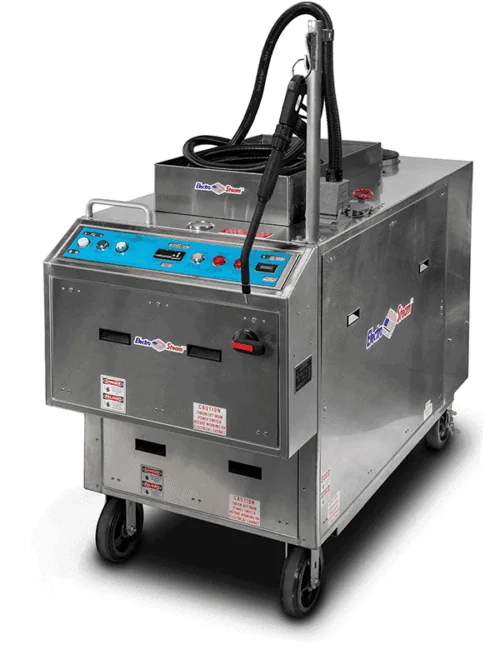 At Electro-Steam, we have years of experience working with clients in the food processing industry, and we have a variety of solutions to meet your needs. These systems come in different sizes with features designed to suit a number of applications while upholding safety standards:
- Eagle Series: Built in accordance with UL 353, the Eagle Series features dual pressure controls, a high-pressure safety reset, low-level cut-off (LLCO), and a 200 psi safety valve, complete with the ASME V mark.
- Steam Master by Menikini Series: An adjustable temperature regulator allows for greater safety and adaptability, and it has a 174 psi safety relief valve with automatic pressure controls set at 145 psi. The tank and low-level cut-off system features an alarm to ensure you’re aware of low solution levels. This series is European Conformity (CE) compliant. Options include a steam gun with a 20-foot hose and an accessories kit.
- Conveyor Belt Systems: Avoid equipment shutdowns and downtime with hands-free, chemical-free cleaning. The FDA-approved materials in our steam cleaning systems can be used on plastic, vinyl, and mesh conveyor belts. You’ll meet industry standards for cleanliness, reduce labor costs, and use up to 99% less water than what you would have to use for traditional conveyor belt cleaning.
Learn More About Steam Cleaning
Dry steam cleaning is cost-effective, time-saving, and environmentally friendly. To learn more benefits of using steam to clean conveyor belts in food processing facilities, download our eBook, “The Benefits of Steam for Conveyor Belt Cleaning in Food Processing.” If you have any questions about our catalog and customization capabilities, please contact us. We’re happy to help you find the right steam cleaning solution for your facility.
 An important aspect of the brewing process is temperature control. Brewers must dictate temperature levels to ensure the various ingredients in a beer, such as grain, hops, yeast, and water, react a certain way. To a large extent, this controlled reaction determines the type of flavor of the beer.