
 Proudly Manufactured in the USA

Yes, You Can Steam Clean Electrical Panels! The Myth of Moisture
Mention spraying steam near an active electrical panel, and most plant managers will look at you like you’ve completely lost your mind.
It makes sense. We’ve all been taught the golden rule of industrial safety: water and electricity do not mix. The assumption is simple, steam plus electricity equals an immediate short circuit, blown fuses, or ruined components. Except, in the world of dry steam cleaning, that assumption is mostly wrong.
The “Myth of Moisture” How Dry Steam Actually Works
The fear of cleaning around electronics with steam comes from a misunderstanding of what steam actually is in an industrial context. Traditional pressure washers or wet-steam systems drench surfaces in liquid water. Dry vapor steam, on the other hand, is an entirely different beast.
Dry vapor steam systems operate under high pressure and high heat, producing vapor that is 95% to 98% dry. It contains only a tiny fraction of liquid water compared to standard cleaning methods.
Here is why that matters for sensitive equipment:
- Instant Evaporation: The intense heat instantly breaks down grease, oil, and grime on contact. The steam vapor evaporates almost immediately leaving minimal surface moisture that dries quickly
- No Standing Water: Because there is no liquid runoff, water can’t pool inside sensitive enclosures or collect in conduit lines.
- Zero Chemical Residue: Dry vapor eliminates the need for conductive and corrosive chemical cleaners or water rinses.
When applied correctly, dry steam lifts stubborn buildup off control panels without causing electrical shorts or corrosion.
Five Places You Forgot to Clean (That Dry Steam Tackles Easily)
Sanitation isn’t just about wiping down the main conveyor belt. Dust, grease, and moisture build up in the overlooked corners of your facility, creating harborages for bacteria or causing equipment failure over time.
Here are five places you might be skipping and how dry vapor steam cleans them safely:
1. Control Panels & Electrical Housings
Dirt and airborne oils collect on human-machine interfaces (HMIs), wiring harnesses, and switchgear. Dry vapor steam melts away grime and sanitizes touchpoints without infiltrating sensitive electrical connections.
2. Condenser Fins & Refrigeration Coils
Pressure washers can easily bend delicate aluminum condenser fins, and chemical cleaners leave behind unwanted odors in food-processing environments. Dry steam penetrates deep into coil banks, melting away buildup without damaging the structure or flooding cold storage areas.
3. Diamond Decking & Textured Flooring
Non-slip diamond plating is great for worker safety, but the deep grooves are notorious for trapping grease, food particles, and dirt. Dry steam blasts deep into the diamond pattern, lifting embedded dirt that standard mops and scrubbers leave behind.
4. Conveyor Motors & Proximity Sensors
Traditional hose-downs require tediously bagging or taping off motors, encoders, and sensors before washing. Dry vapor allows you to clean around these sensitive components directly, drastically cutting down on prep and downtime.
5. Gaskets, Seals, and Door Tracks
Microscopic cracks in rubber gaskets and tight tracks around cold-storage doors are breeding grounds for mold and bacteria. The heat of dry steam sanitizes these tight spots effortlessly where brushes can’t reach.
Unlock True Facility Versatility
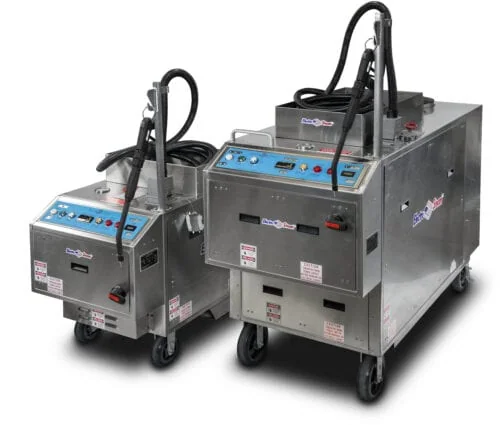
Rethinking your sanitation routine doesn’t mean risking your equipment. By leveraging high-temperature dry vapor, you can clean harder, reach tighter spaces, and protect sensitive electronics, all with a single piece of equipment.
Ready to Streamline Your Cleaning Protocol?
Stop spending hours bagging electronics or scrubbing stubborn decking by hand. Learn how dry vapor steam generators can transform your facility’s maintenance routine at Electro-Steam. Contact us today to speak with a dry steam specialist!
 In the beverage industry, meeting strict standards for safety and sanitation is absolutely critical. Whether you operate a brewery, distillery, winery, or juice and soda manufacturing plant, your processing equipment is prone to trapping materials. Furthermore, the wet conditions commonly found in these facilities require professionals to be extremely vigilant in order to prevent the growth and spread of harmful pathogens.
